
How Much Does It Cost to Clean a Waterway?
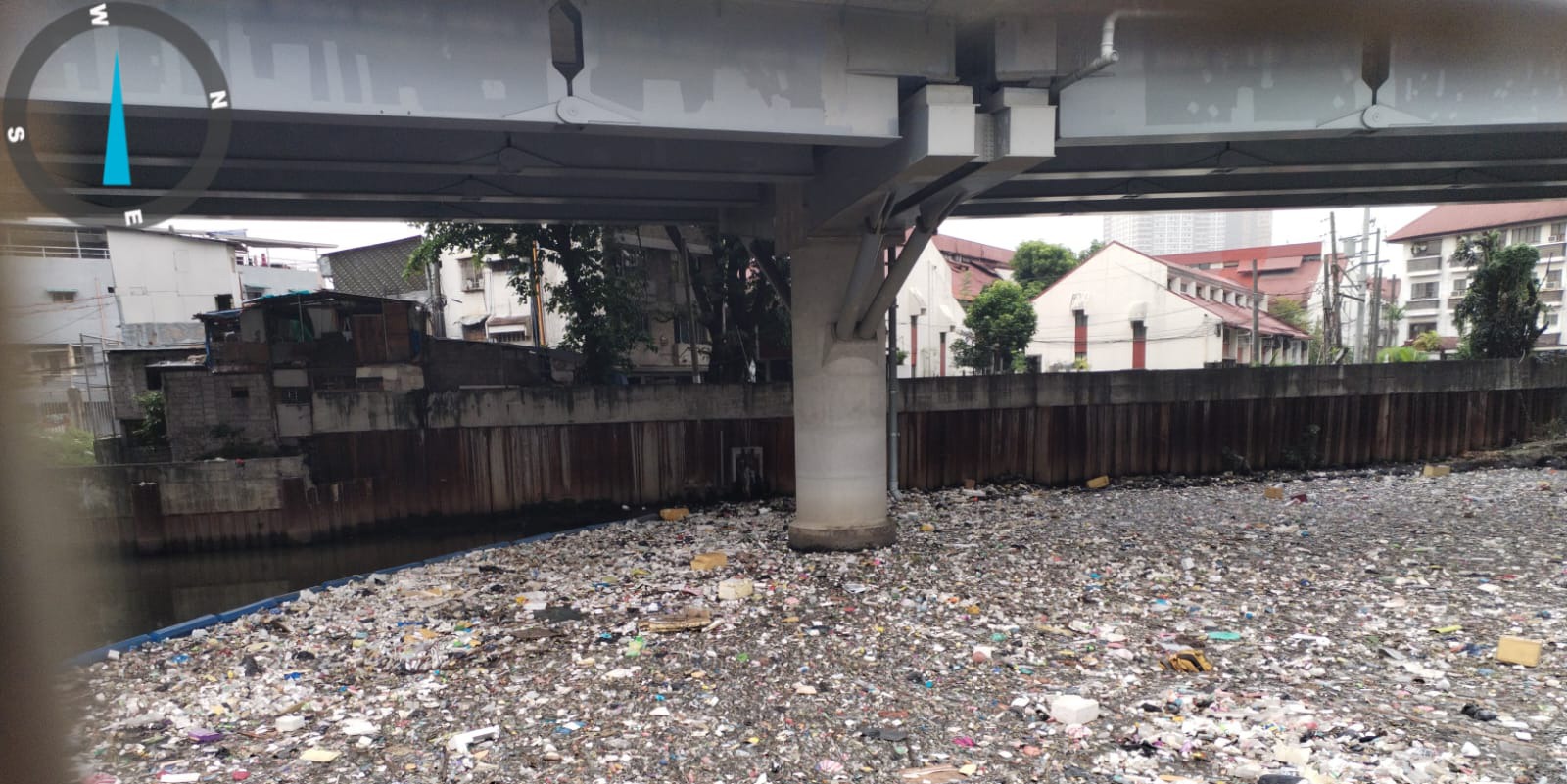
If you manage a port, harbour, marina, lake or urban waterway, keeping it clean is not a one-time job. Floating plastic, packaging and vegetation return constantly, creating a recurring operational cost. The real question is not how much one cleanup costs — it is how much it will cost to keep the waterway clean, month after month.
The answer depends on the size of the waterway, the volume and type of waste, cleanup frequency, manpower, equipment and the operating model used. Autonomous electric boats offer a different approach, but they carry their own costs too. A fair comparison has to weigh total operating cost against the amount of waste actually removed.

Operational Cost Multipliers Over Time
As waterway cleanup operations expand, the biggest financial difference is not always the initial vessel cost — it is how operating costs scale over time. Conventional diesel and crewed operations generally require more fuel, more crew hours and more vessel deployments as coverage increases. Autonomous electric fleets can change this relationship by allowing suitable operations to scale through centralized supervision and repeatable fleet deployment.
10x Workforce Output
In legacy operating models, a team of around 50 workers may be required to support a fleet of roughly 15–20 crewed vessels, depending on shift patterns and operating requirements. With autonomous fleet operations, the same workforce can potentially supervise a much larger number of vessels through centralized dashboards and remote operations. In suitable deployments, this can significantly increase waterway coverage and waste-removal capacity per employee, with fleet-scale models targeting up to a 10x increase in operational output per worker.
Eliminating Exposure to Fuel Volatility
Standard diesel skimmers or manual boat crews can typically cost anywhere from $1,500 to $4,000+ per day when fuel, crew labour and routine maintenance are included, and traditional vessels remain exposed to fluctuations in marine diesel prices. Electric autonomous systems remove direct diesel consumption from the vessel operating model, replacing it with electricity and charging costs. They may also reduce certain mechanical maintenance requirements, since electric drivetrains generally have fewer moving parts than conventional diesel propulsion systems.
Traditional Cost Per Tonne
Traditional cleanup projects can also become expensive when total operating and disposal logistics are measured against the amount of debris recovered. Depending on the location, vessel deployment, labour requirements, waste type and downstream disposal process, conventional projects may average approximately $1,000 to $3,000+ per tonne of debris removed. This makes collection output an important part of any cost comparison.
Example: Conventional Cleanup Calculation
Assume a conventional cleanup vessel costs $2,500 per operating day, including crew, fuel and maintenance. If it removes 1 tonne of floating debris during that day and disposal and transport add another $500, the total project cost is $3,000 for 1 tonne of waste.
Calculation: $2,500 vessel operation + $500 disposal/logistics = $3,000 total cost ÷ 1 tonne collected = $3,000 per tonne.
Example: Scaling the Operation
If the same conventional operation needs to cover a larger area, scaling usually means adding more crew hours or deploying additional vessels. For example, expanding from one $2,500-per-day vessel to four vessels could increase direct daily operating expenditure to approximately $10,000 before additional disposal and logistics costs. This illustrates how traditional operating costs can rise broadly in line with coverage requirements.
Shift to Robotics-as-a-Service (RaaS)
A Robotics-as-a-Service model can offer an alternative to owning and maintaining a fleet directly. Instead of managing unpredictable repair costs, equipment depreciation and individual vessel ownership, organisations can evaluate fixed or more predictable service-based operating budgets. As fleet coverage and waste volumes increase, the cost per kilogram collected may improve depending on the deployment model, operating conditions and service structure.
Upskilling the Maritime Workforce
Automation can also change the role of the workforce rather than simply removing it. Instead of requiring personnel to spend long hours onboard or manually pull heavy debris from polluted water, suitable operations can shift workers into roles such as fleet supervisors, remote operators and environmental data technicians. These teams can focus on mission planning, navigation oversight, telemetry and operational data while reducing direct exposure to physically demanding cleanup work.
The key long-term calculation is therefore not simply the daily price of one boat. It is the relationship between total operating cost, waterway coverage, workforce requirements and the kilograms or tonnes of waste removed over time. By replacing some variable diesel and onboard labour costs with scalable electric and autonomous operations, municipalities and port authorities may be able to create a more predictable long-term cleanup model.
How to Calculate the True Cost
A practical way to evaluate cleanup economics is to calculate total operating cost over a defined period, such as one month.
Monthly Cleanup Cost = Labour + Vessel Operation + Fuel/Energy + Maintenance + Waste Handling + Supervision
Total cost alone does not show how much work is actually being done, so a more meaningful figure is cost per tonne of waste removed.
Cost per Tonne = Total Cleanup Cost ÷ Total Tonnes of Waste Collected
A lower-cost vessel is not necessarily the more economical option if it collects significantly less waste or needs more people to operate.
What Determines the Cost?
There is no universal price for cleaning a waterway, because every operating environment is different.
- Size of the waterway — larger areas need more coverage, operating time and planning than a small enclosed marina.
- Type and volume of waste — plastic bottles behave very differently from dense floating vegetation like water hyacinth, which affects equipment, operating time and disposal.
- Cleanup frequency — a one-time cleanup and a recurring programme have very different economics.
- Labour and safety — trained personnel, supervision and safety procedures add up when cleanup is required often.
- Fuel, energy and equipment — fuel or electricity, maintenance, repairs and charging infrastructure should be measured over the full operating period, not as isolated costs.
- Waste handling and disposal — unloading, transporting, sorting and disposing of collected material is part of the real cost, not an afterthought.
Why Traditional Cleanup Gets Expensive
A conventional cleanup operation carries several recurring expenses: boats and equipment, crew and safety requirements, fuel, vessel maintenance, waste disposal, transport and logistics, and operational supervision. Because debris keeps returning, the cleanup operation has to keep returning too, which is what makes waterway cleanup expensive over time. The most useful comparison is not the purchase price of one vessel versus another — it is how much it costs to keep a specific area clean over a defined period.
How Autonomous Boats Change the Equation
Autonomous electric vessels change the cost structure of waterway cleanup by reducing the need for continuous onboard manpower and using electric propulsion instead of direct diesel consumption. Instead of a crew remaining onboard throughout every mission, the operation shifts toward remote supervision, electric charging, preventive maintenance, software and periodic technical support. Autonomy does not mean zero operating cost, but it changes what the money is actually being spent on.
According to Clearbot Class 3 specifications, the vessel is designed to collect up to 200 kg of floating waste per hour under suitable conditions, with an advertised battery life of up to eight hours. Actual performance varies with waste density, debris type, water conditions and mission duration, so theoretical maximum capacity should not be treated as guaranteed daily output.
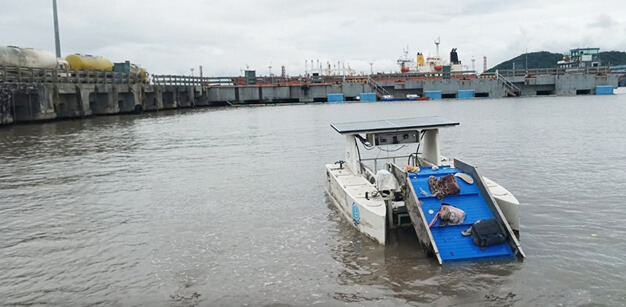
Clearbot operating independently on the water, illustrating the autonomous operating model discussed in this section.
Is Autonomous Cheaper Than Diesel?
There is no responsible way to answer that with a simple yes or no — it depends on the specific operation. A conventional diesel vessel involves ongoing spending on fuel, onboard personnel and mechanical maintenance. An autonomous electric vessel has a different set of requirements, including charging, remote supervision and technical support. The most useful question is not which boat is cheaper to buy. It is which system can remove the required amount of waste at the most effective long-term operating cost.
When Does Autonomous Make Sense?
Autonomous technology will not necessarily suit every waterway, but it is worth considering when:
- Surface waste returns frequently
- Cleanup is required regularly
- Labour represents a significant recurring cost
- The operating environment suits autonomous navigation
- The work is repetitive and predictable
- Measurable operational data is needed
- Reducing direct diesel use is a priority
The Real Cost of Keeping a Waterway Clean
There is no universal answer to how much it costs to clean a waterway. The final figure depends on the size of the operating area, the amount and type of waste, cleanup frequency, labour requirements, vessel costs, maintenance and waste handling. For recurring operations, the most useful approach is to calculate total operating cost over a defined period and compare that figure with the amount of waste actually removed.
Traditional cleanup methods can be effective, but regular operations often involve continuous spending on labour, vessel operation and maintenance. Autonomous electric systems offer a different operating model by reducing the need for continuous onboard personnel during suitable missions and replacing direct diesel consumption with electric propulsion. Ultimately, the important question is not simply how much it costs to clean a waterway once — it is how to keep that waterway clean consistently while managing the long-term cost of the operation.
Planning a Waterway Cleanup Programme?
Before selecting a cleanup method, organisations should evaluate their operating area, waste volume, cleanup frequency and existing operational costs. Comparing total cost, collection output and long-term operational requirements gives a much stronger basis for deciding whether a conventional or autonomous solution is the right fit. For organisations considering a managed service model, Clearbot rental and end-to-end service options can also be evaluated alongside conventional cleanup costs.


