
Why Indian Municipalities are Choosing Service-Based autonomous waterway management
Introduction
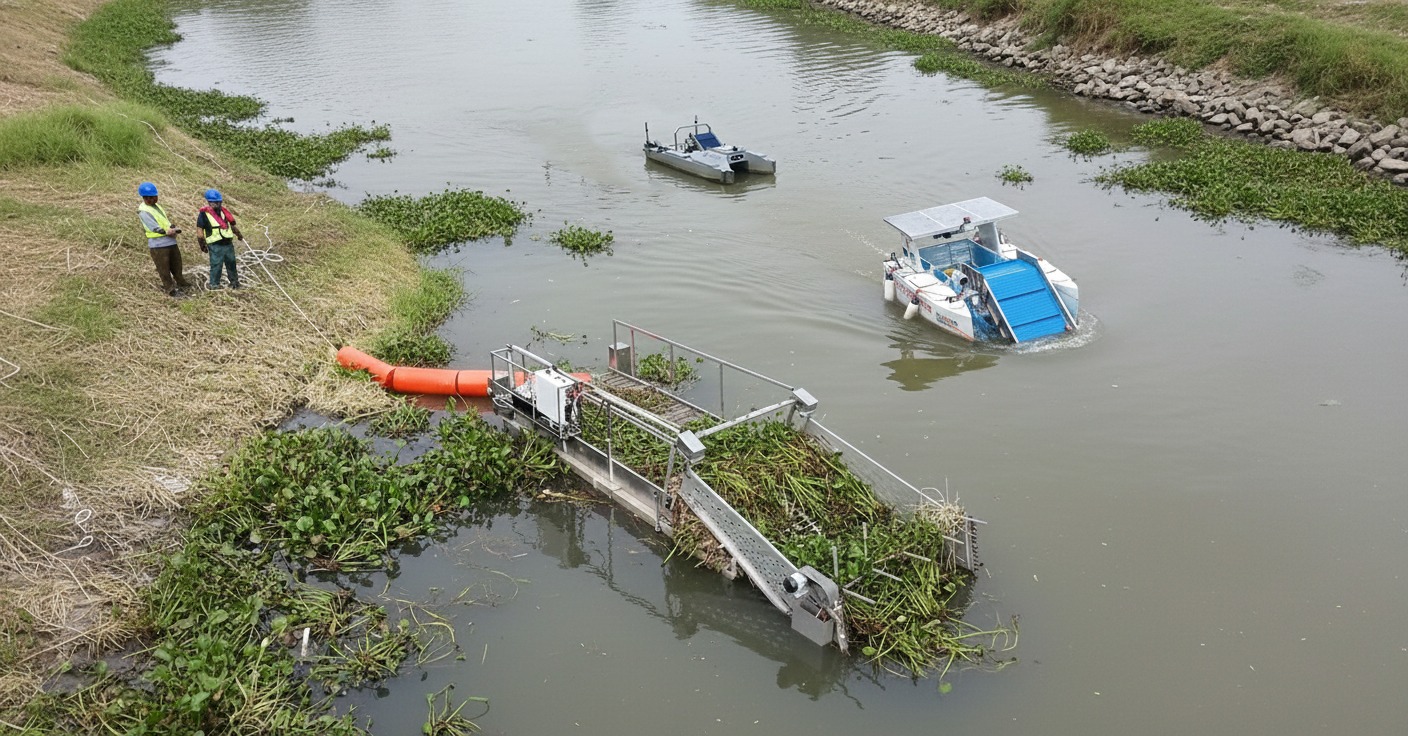
Across India, the volume of waste entering urban waterways is reaching unprecedented levels due to rapid urbanization. While the goal is to remove as much debris as possible, traditional manual labor is reaching its limit in terms of safety and scalability. To address this, forward-thinking municipalities are beginning to move away from simply purchasing equipment and are instead exploring service-based autonomous management.
1. The Pilot as a Blueprint for Resilience
A single autonomous vessel isn't just a cleaning tool; it is a "digital scout" for the city's health. Taking inspiration from global smart city initiatives—like Singapore's use of tech to monitor water quality or Amsterdam's autonomous canal logistics—these initial deployments serve as a proof of concept for broader urban resilience.
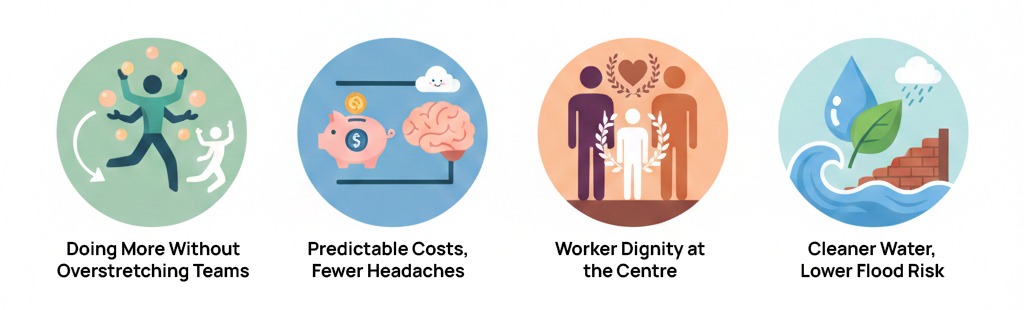
- Flood Mitigation: Continuous surface cleaning ensures organic and plastic debris is removed before it can clog drainage arteries.
- Asset Protection: By maintaining the flow of water, cities protect the structural integrity of historic sites and public infrastructure.
- Zero-Emission Operations: Electric vessels ensure that maintaining the waterway doesn't lead to further pollution through fuel spills or emissions.
A Low-Risk Entry into High-Tech Management
For most municipalities, the "jump" to high-tech equipment is risky. The Robots-as-a-Service (RaaS) model is designed to bridge this gap by allowing cities to test advanced engineering without the burden of asset ownership.
- Uptime over Ownership: The city pays for a "clear waterway" result, while the service partner handles all maintenance, charging, and logistics.
- Fixed, Predictable Costs: This model removes the "hidden costs" of equipment repairs, making budgeting for environmental health far more predictable.
Turning Information into Governance
Modern urban governance requires verifiable data. Even a single-vessel deployment provides a level of transparency that manual crews cannot match.
- Verifiable Audit Trails: Live dashboards provide hard data on exact routes covered and volumes collected.
- Evidence-Based Planning: This digital record helps city authorities justify municipal spending and supports more accurate urban planning for the future.
Professionalizing the Municipal Workforce
The move toward autonomous systems is fundamentally about the evolution of city roles.
- Safety First: Technology moves human workers out of toxic and polluted environments.
- Role Transformation: Municipal teams transition into supervisory and decision-making roles, managing the digital fleet and analyzing data.
Real-World Foundations: Bharatpur and Gaya
These initial deployments are already proving the model's viability:
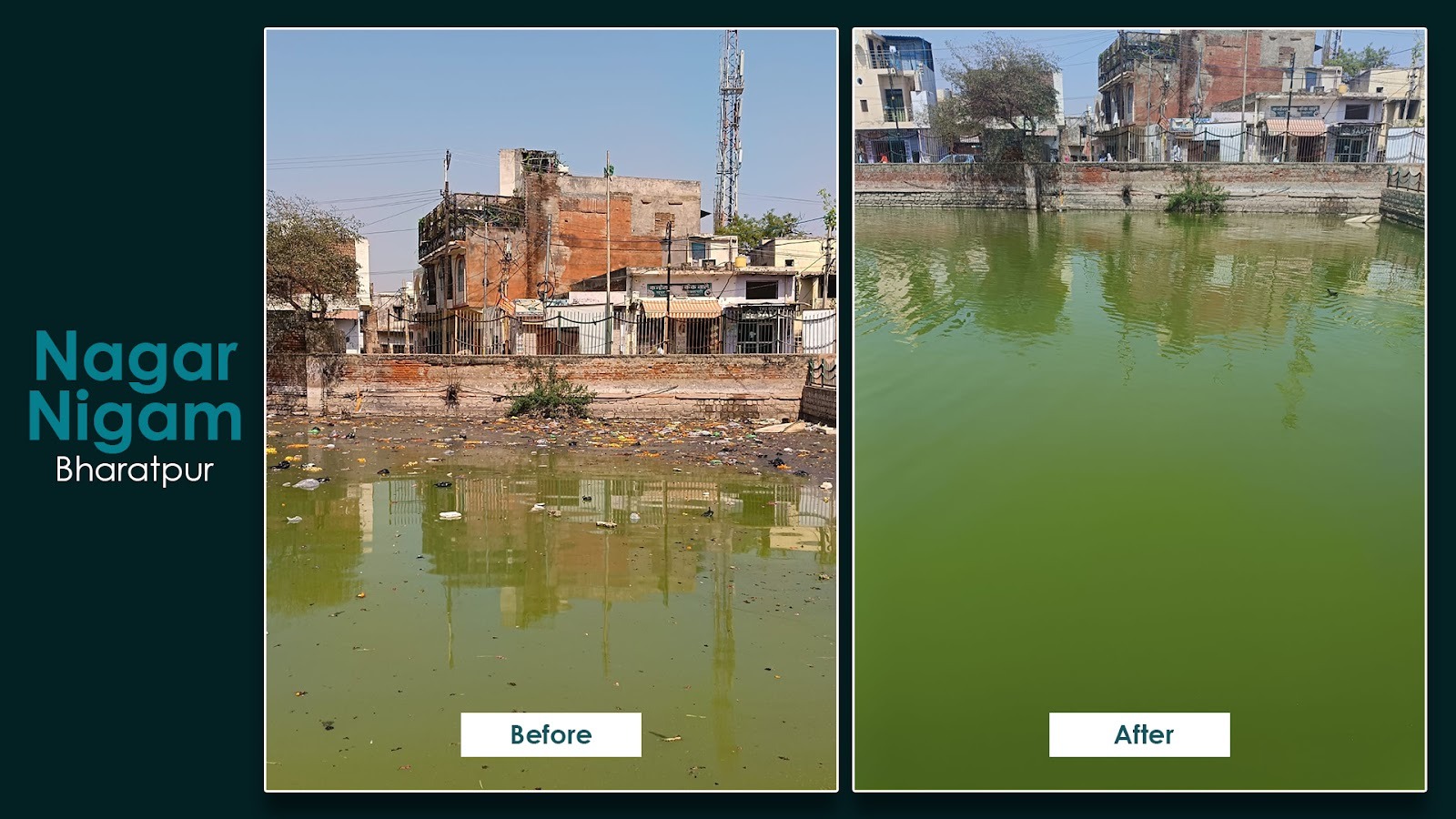
- Bharatpur, Rajasthan: In collaboration with Nagar Nigam Bharatpur, a Clearbot Class 2 vessel removed over 10.5 tonnes of waste from the Lohagarh Fort moat, supporting both heritage preservation and public aesthetics.
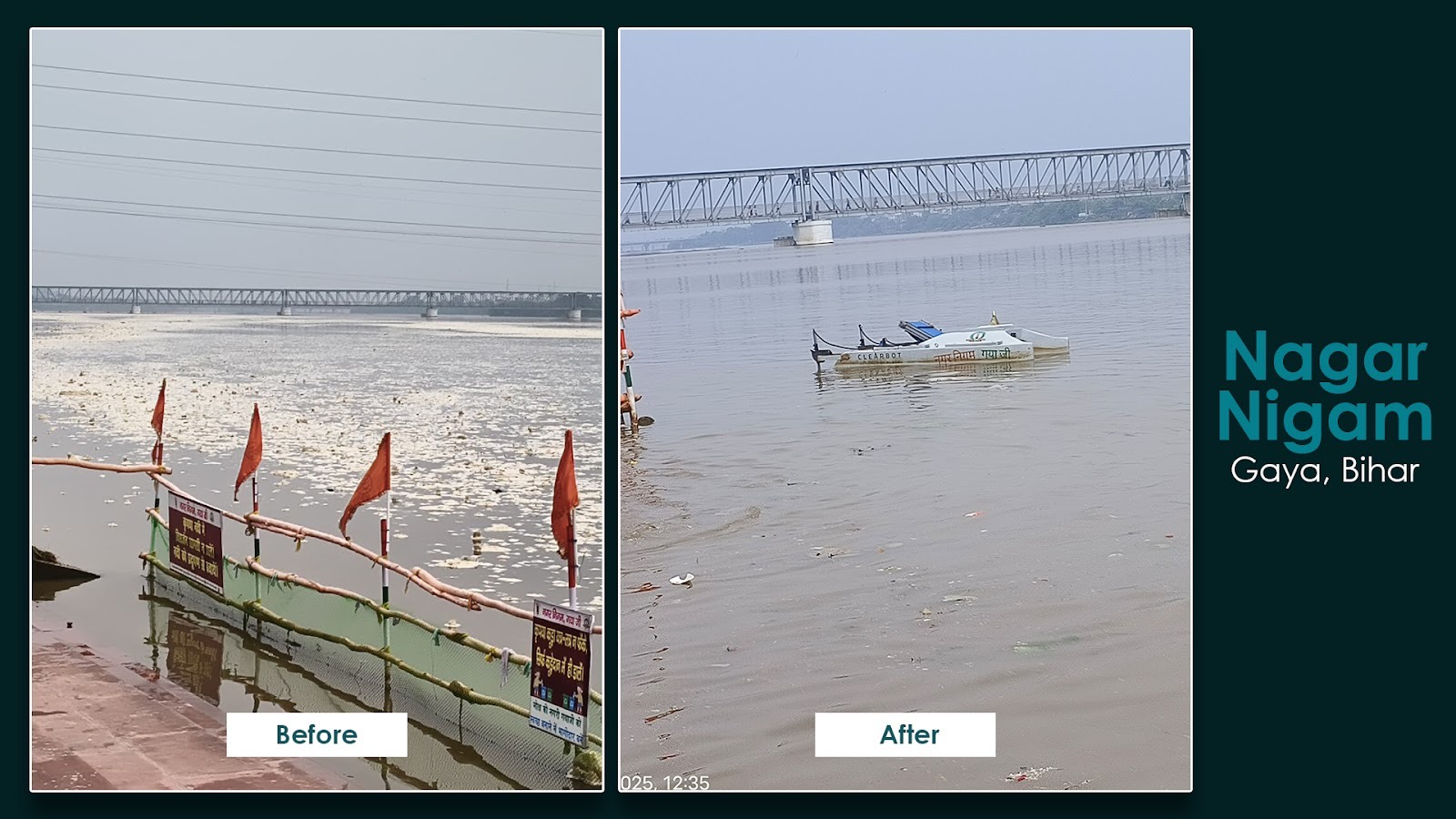
- Gaya, Bihar: Working with Nagar Nigam Gaya, a single vessel removed 5.5 tonnes of waste from the Falgu River in just 15 working days, improving water flow during periods of high public activity.

Proven Use Cases
Bharatpur, Rajasthan
In collaboration with Nagar Nigam Bharatpur, Clear Robotics deployed Clearbot Class 2 at the Lohagarh Fort moat. Over 10.5 tonnes of floating waste were removed, restoring cleanliness and improving the ecological balance of this historic waterbody - supporting both heritage preservation and public aesthetics.
Gaya, Bihar
Working with Nagar Nigam Gaya, Clearbot Class 2 removed 5.5 tonnes of waste in just 15 working days from a stretch of the Falgu River. Continuous surface cleaning improved water flow and contributed to better-managed urban waterways during periods of high public activity.
From Pilot to Permanent: A 12-Month Roadmap for Cities
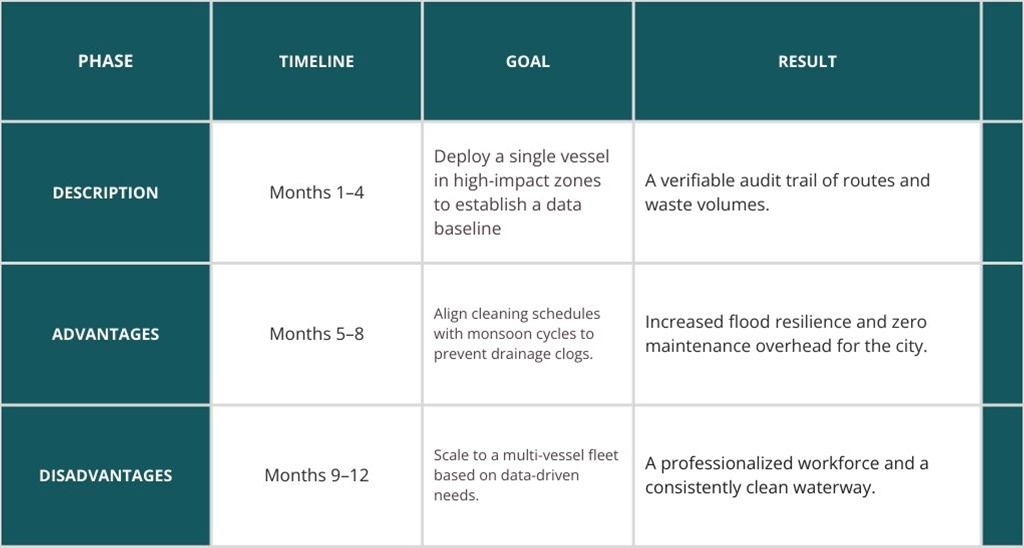
Moving toward a smarter city doesn't happen overnight. By starting with a single-vessel service, municipalities can test, prove, and scale their blue infrastructure without the financial risk of buying equipment.
Why This Matters for the City
This phased approach allows a city to grow its capacity at its own pace. Initial successes in Bharatpur (10.5 tonnes removed) and Gaya (5.5 tonnes removed) show that even a single vessel creates an immediate foundation for a safer, more predictable urban environment. By choosing a service model, municipalities ensure their waterways are protected by cutting-edge engineering without the "asset trap" of owning machinery that eventually breaks down.
The Vision
By moving from reactive cleaning to a data-driven service model, Indian municipalities are not just clearing debris; they are installing the high-tech circulatory system required for a truly resilient and modern city.


