
The Future of Dredging in India: Why Electric Shallow-Water Dredgers Are Becoming Essential
Introduction
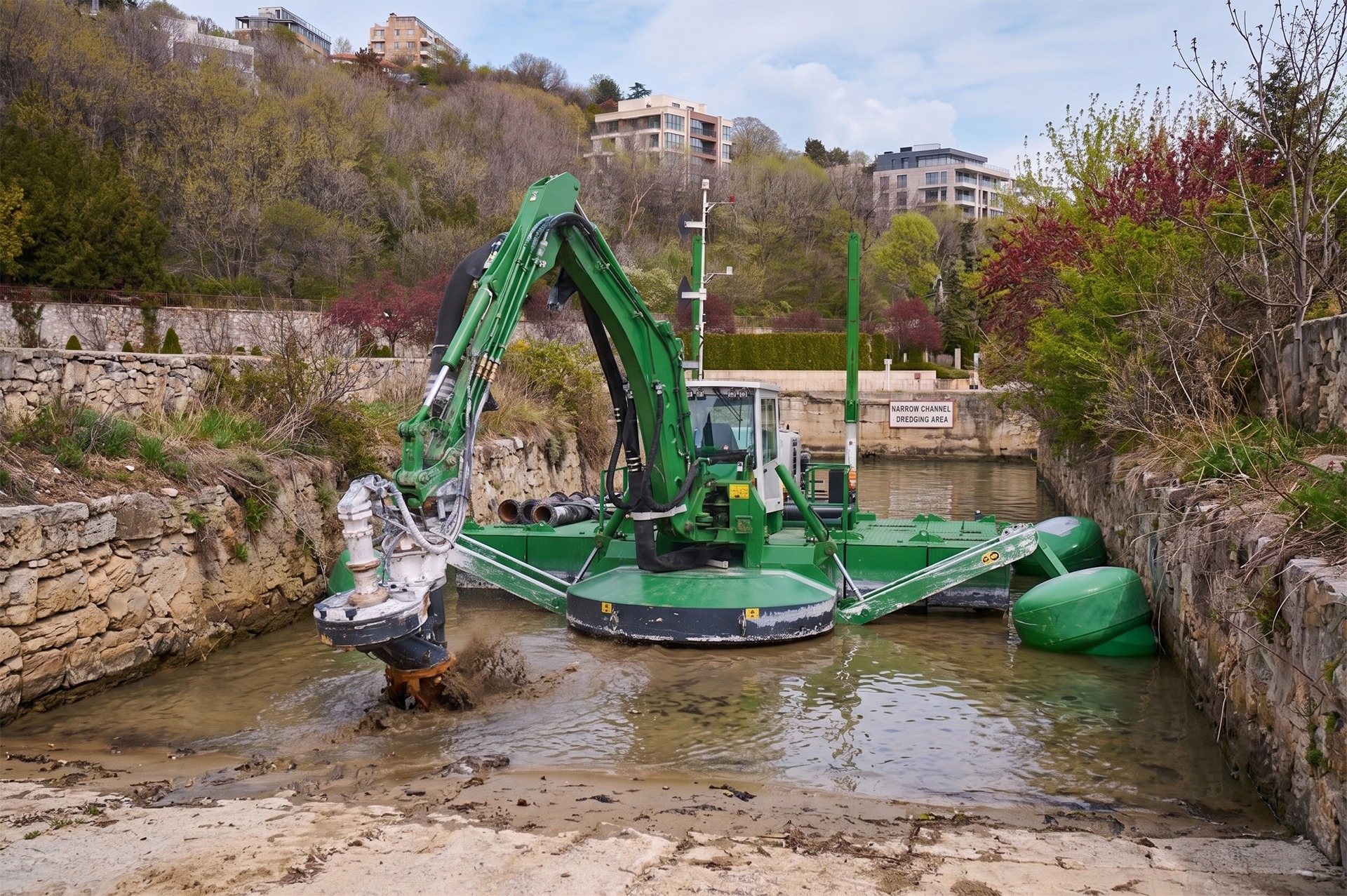
India's waterways are undergoing one of their biggest transformations in decades. With growing investments in inland waterways, port modernization, and urban flood management, dredging has become more important than ever.
Yet while the industry continues to expand, much of the equipment performing this work still relies on technologies that have changed very little over the past several decades. Conventional diesel-powered dredgers remain the industry standard, bringing with them high operating costs, emissions, noise, and maintenance challenges.
As governments and infrastructure operators seek more sustainable and cost-effective solutions, electric shallow-water dredgers are emerging as a practical alternative—particularly for canals, rivers, urban waterways, and environmentally sensitive locations.
India's Dredging Market Is Growing Rapidly

India's inland waterway sector is expanding rapidly, creating new opportunities for dredging and waterway maintenance. The country has increased its National Waterways from 5 to 111, while inland water transport handled 145 million metric tonnes of cargo in 2024–25. To support this growth, the Inland Waterways Authority of India (IWAI) has announced ₹1,350 crore in new investments. Looking ahead, Maritime India Vision 2030 aims to attract ₹3–3.5 lakh crore in investments across ports and maritime infrastructure, driving long-term demand for dredging equipment and maintenance services. This momentum is already reflected in hundreds of active dredging tenders and multi-year maintenance contracts across the country.
Why Traditional Dredging Faces Increasing Challenges
Although dredging demand continues to rise, many operators face similar operational challenges.
Rising Operating Costs
Diesel-powered dredgers consume large amounts of marine diesel and lubricants during continuous maintenance operations. Since many dredging contracts require equipment to work for extended periods, fuel becomes one of the largest operating expenses.
Maintenance adds another layer of cost. Complex diesel engines, transmissions, hydraulic systems, and frequent servicing increase both downtime and lifecycle expenses.
Environmental Regulations Are Becoming Stricter
Many dredging projects now operate in environmentally sensitive waterways such as the Ganga, Brahmaputra, lakes, wetlands, and protected ecosystems.
Authorities increasingly monitor:
- Air emissions
- Oil leakage risks
- Underwater noise
- Water quality impacts
Projects operating under programs such as Namami Gange must balance maintenance requirements with environmental compliance, making cleaner technologies increasingly attractive.
Noise Limits Where Work Can Be Performed
Traditional dredgers generate significant engine noise and vibration.
This creates operational challenges near:
- Urban waterfronts
- Residential areas
- Tourist destinations
- River cruise routes
- Fishing communities
In some locations, dredging activities may need to be restricted to specific operating windows, reducing productivity.
Many Waterways Are Simply Too Shallow
Perhaps the biggest limitation is physical access.
India's waterways include thousands of narrow canals, drainage channels, flood-control systems, reservoirs, and shallow river sections where larger conventional dredgers struggle to operate.
Seasonal water level fluctuations make this challenge even greater.
As a result, many maintenance projects require smaller, more maneuverable vessels capable of working efficiently in confined environments.
Why Electric Shallow-Water Dredgers Make Sense
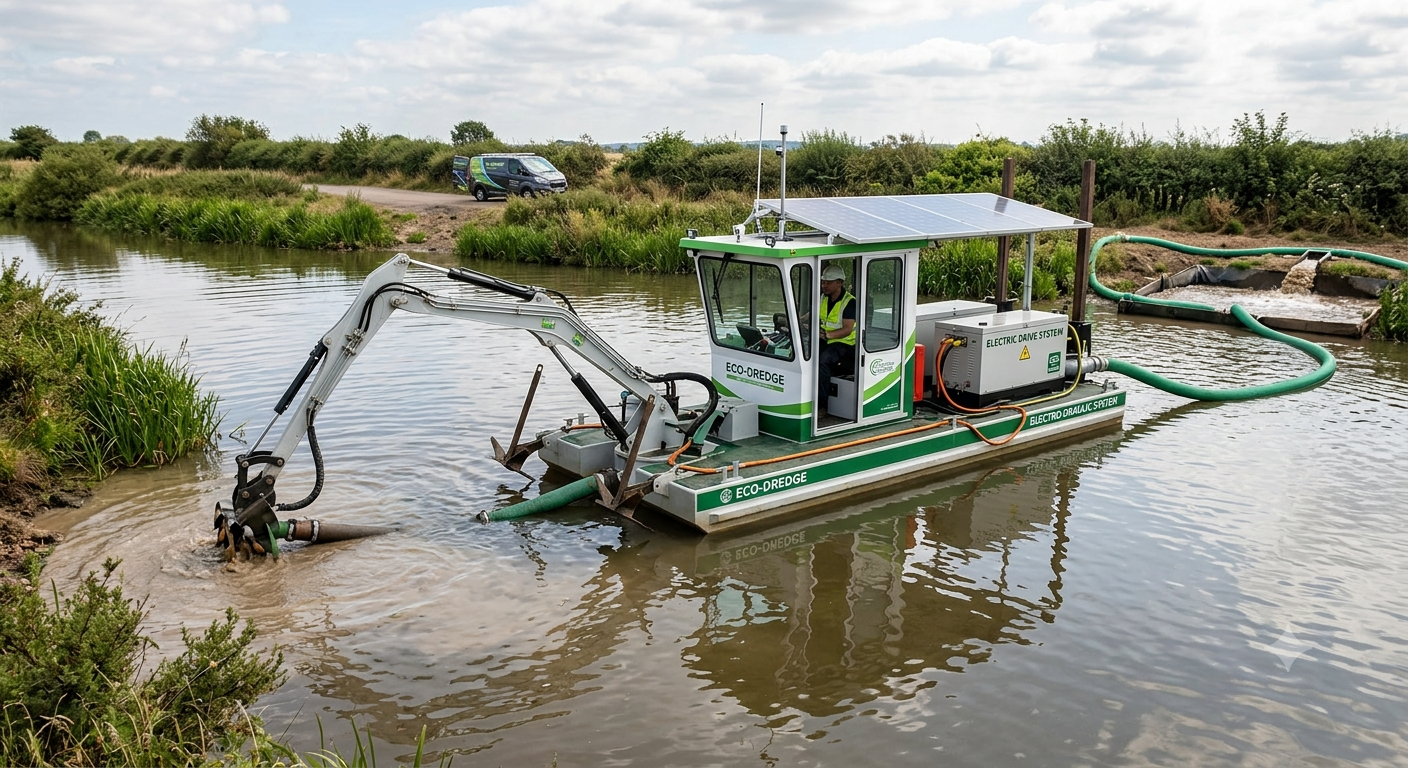
These challenges create an opportunity for a new generation of dredging vessels.
Electric propulsion offers several operational advantages, particularly for shallow-water applications.
Lower Operating Costs
Electric motors eliminate fuel consumption while reducing routine maintenance requirements.
Compared to conventional diesel systems, electric drivetrains contain significantly fewer moving components, reducing wear and simplifying maintenance schedules.
For long-term maintenance contracts, more predictable operating costs can improve project planning and budgeting.
Better Performance in Tight Waterways
Electric propulsion systems can be designed with compact, distributed drive units that reduce draft and improve maneuverability.
This enables vessels to access:
- Narrow canals
- Urban drainage systems
- Retention ponds
- Flood-control channels
- Shallow rivers
These are often the waterways that require the most frequent maintenance but remain difficult for larger dredgers to reach.
Cleaner Operations
Electric dredgers produce zero direct exhaust emissions during operation.
This supports broader sustainability goals while reducing local air pollution around populated waterways.
As environmental standards continue to evolve, cleaner equipment can help operators align with emerging policies focused on greener maritime infrastructure.
Quieter Dredging
Electric motors operate with significantly lower noise and vibration compared to diesel engines.
This makes them particularly suitable for projects located near:
- Heritage waterfronts
- Urban riverfront developments
- Eco-sensitive areas
- Tourist destinations
- Residential communities
Reduced noise can also allow maintenance activities to be carried out with less disruption to nearby communities.
Long-Term Contracts Increase the Value of Efficient Equipment
Many inland dredging projects are no longer short-term assignments.
Authorities increasingly award multi-year maintenance contracts that require operators to maintain consistent navigable depths over extended periods.
In these projects, reducing fuel costs, minimizing maintenance downtime, and improving operational reliability become major competitive advantages throughout the contract period.
Electric vessels can help improve cost predictability by reducing dependence on volatile fuel prices while simplifying routine servicing.
Conclusion
India's expanding inland waterways and growing investment in maritime infrastructure are creating new opportunities for innovation in dredging. As projects increasingly demand solutions that are efficient, environmentally responsible, and capable of operating in shallow and confined waterways, the industry is beginning to explore new approaches beyond conventional diesel-powered equipment.
At Clear Robotics, we believe this shift presents an exciting opportunity to rethink how shallow-water dredging is done. While the sector continues to evolve, we're exploring technologies that can help make waterway maintenance cleaner, smarter, and better suited to the needs of the future.


