
Smart Harvesting: Solving the Aquatic Weed Data Crisis

Introduction
Imagine a biological threat that expands exponentially, doubling its territory every 12 days. It chokes out marine life, cuts off sunlight, creates breeding grounds for disease, and paralyzes local economies.
This isn't a dystopian simulation. This is the global reality of water hyacinth (Eichhornia crassipes) invading waterways across Asia-Pacific, Africa, and North America.
Historically, resource managers have fought back using blunt, destructive tactics: dumping chemical herbicides or deploying massive, diesel-chugging mechanical harvesters. Both approaches trigger ecological blowback. Chemicals leave behind rotting mass that depletes oxygen and kills fish, while heavy diesel engines risk catastrophic oil leaks in fragile drinking water reservoirs.
But the physical extraction of the weed is only half the crisis. The ultimate bottleneck isn't the muscle—it's the complete lack of real-time data.
The Muddy Mirror: The Invisible Data Problem
You can’t manage what you can’t measure. Yet, when it comes to managing aquatic vegetation, we are largely operating in the dark.
- The "Wet Weight" Illusion: Water hyacinths are up to 95% water. When a diesel harvester drags a load to shore and weighs it, the "wet weight" doesn't actually tell scientists how much organic phosphorus or nitrogen was extracted from the lake. We get a number, but not the ecological insight.
- Delayed Reaction Times: Because traditional manual mapping takes weeks of fieldwork, water management plans are often outdated before they are even printed. The weeds grow faster than we can analyze the data.
- The Blind Operator: Harvester captains work completely blind to submerged hazards. A hidden tree trunk, an old shopping cart, or a shallow rock can instantly shatter a cutter bar, costing tens of thousands of dollars and halting cleanup efforts for weeks.
To solve this, we don't just need a bigger lawnmower for the water. We need smart, silent, data-gathering vessels that can clear water hyacinth and map the aquatic environment simultaneously.
A Surging Multi-Billion Dollar Global Demand
The scale of this crisis has triggered a massive, disruptive transition in the global marine industry. The baseline market for aquatic weed harvesters—valued at $944.96 million in 2023—is projected to skyrocket to $2.13 billion by 2032, growing at a strong Compound Annual Growth Rate (CAGR) of 9.5%.
Municipalities and private water authorities are actively rejecting loud, polluting diesel boats due to strict environmental mandates. The demand is concentrated across three global hotspots:
- Asia-Pacific (The Epicenter): Driven by massive government river cleanup initiatives in India (like the Ganges and the lakes of Kerala) and China, where high agricultural runoff fuels explosive hyacinth growth.
- Africa (Lake Victoria): Where hyacinth infestations drop local fishing yields by 20% to 50% annually and create severe public health risks.
- North America & Europe: Driven by strict EPA and EU regulations restricting chemical controls, forcing communities to seek zero-emission mechanical solutions.
The "Circular Bioeconomy" Gold Rush
Why is data suddenly the most valuable commodity in weed harvesting? Because we are entering a waste-to-value revolution. 1 ton of water hyacinth biomass can yield up to 400 liters of ethanol biofuel or be processed into premium high-nitrogen organic fertilizer.
However, bio-refineries and commercial composters need a predictable supply chain. They need to know the precise chemical makeup and moisture levels of the arriving biomass. An intelligent harvester must act as a data center, measuring these variables while cutting.
Proof from the Field: Smarter Harvesting Through Data
Intelligent harvesting is about more than removing vegetation—it generates real-time operational data that helps authorities plan, monitor, and optimize cleanup efforts.
Asian Development Bank (Philippines)
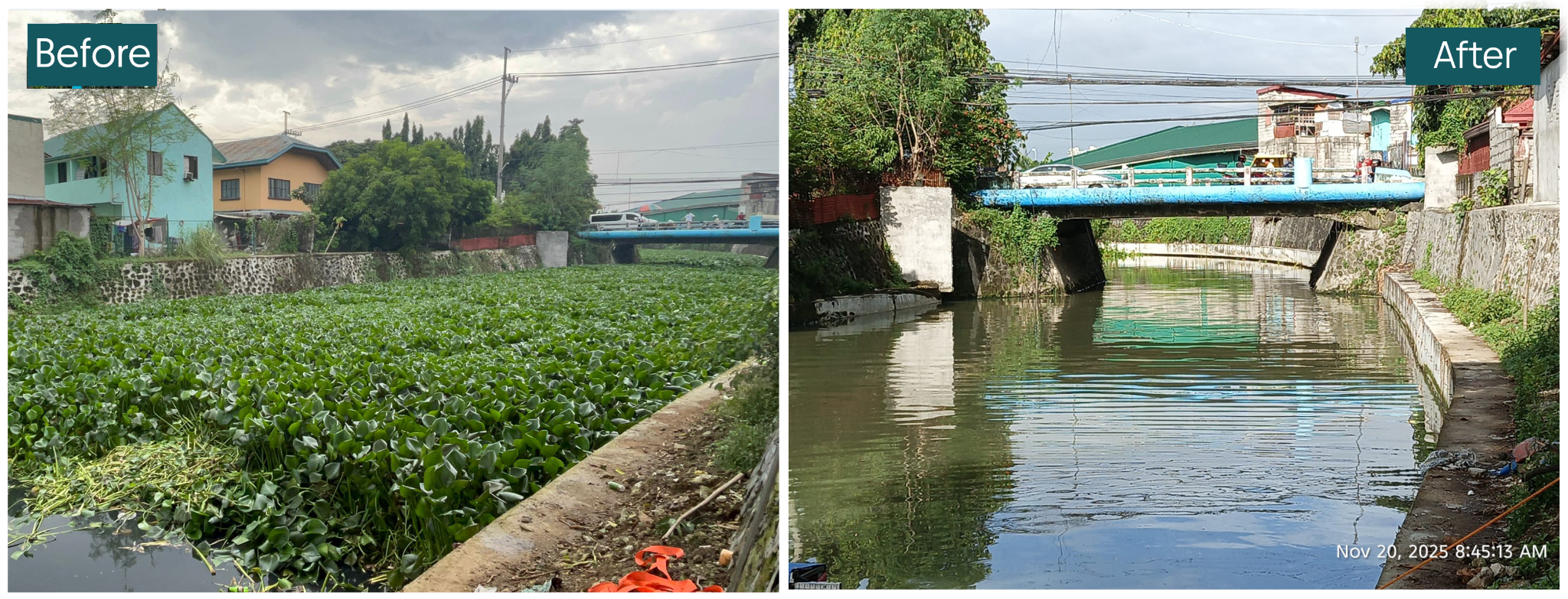
During its deployment with the Asian Development Bank, the Clearbot Alligator removed approximately 140 tons of water hyacinth while automatically recording harvesting activity and biomass data.
Automated data collection reduced the need for manual field monitoring and reporting, giving project teams a clear view of cleanup progress while allowing personnel to focus on restoration instead of documentation.
Veolia Hong Kong
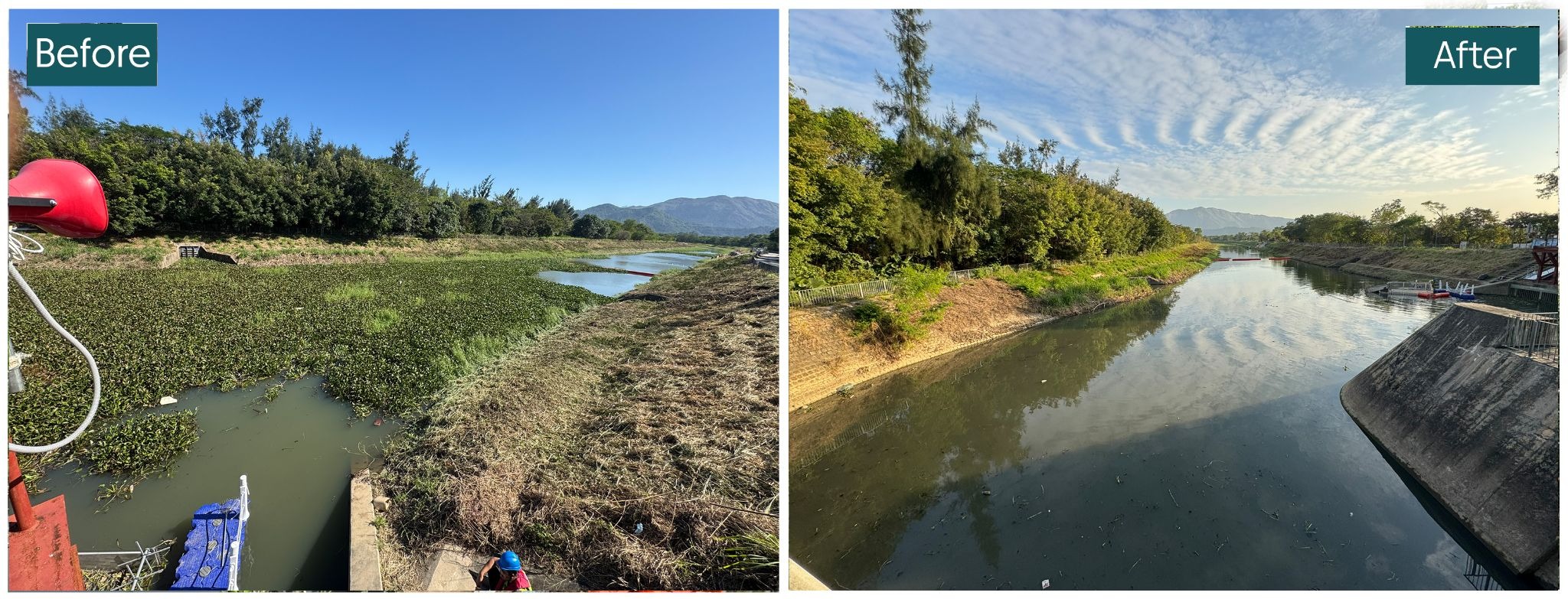
In partnership with Veolia Hong Kong, the Clearbot Alligator removed approximately 260 tons of water hyacinth while continuously capturing operational data throughout the project.
Digital mission records and biomass tracking simplified reporting, reduced manual data collection, and provided better visibility for planning future vegetation management.
Beyond Weed Removal
Traditional harvesters remove weeds. Intelligent harvesters also generate actionable data. By combining autonomous harvesting with real-time analytics, municipalities can reduce manual reporting, improve operational visibility, and make better-informed waterway management decisions.
Enter the Zero-Emission, Data-Driven Revolution
Instead of sending loud, polluting diesel boats out to play guessing games, the future of waterway restoration relies on high-speed edge computing on the water.
By transitioning to fully electric, autonomous harvesters, the cleanup process undergoes a massive paradigm shift:
- Instant Torque on Clean Energy: Electric marine motors deliver maximum torque instantly. This prevents cutting blades from getting choked and bogged down by dense, fibrous root systems—all without a single drop of fuel or oil leaking into the ecosystem.
- Real-Time Biomass Tracking: Onboard downward-facing sensors and optical AI cameras can analyze the volume and thickness of the hyacinth mats before they even hit the conveyor belt.
- Water Quality Telemetry: While clearing weeds, the boat's flow-through sensors can log dissolved oxygen, pH, and nutrient levels, sending live telemetry to an online dashboard. For the first time, water managers can see the immediate positive ecological impact of their harvesting efforts, yard by yard.
The Next Evolution: Introducing Clearbot Alligator Neo
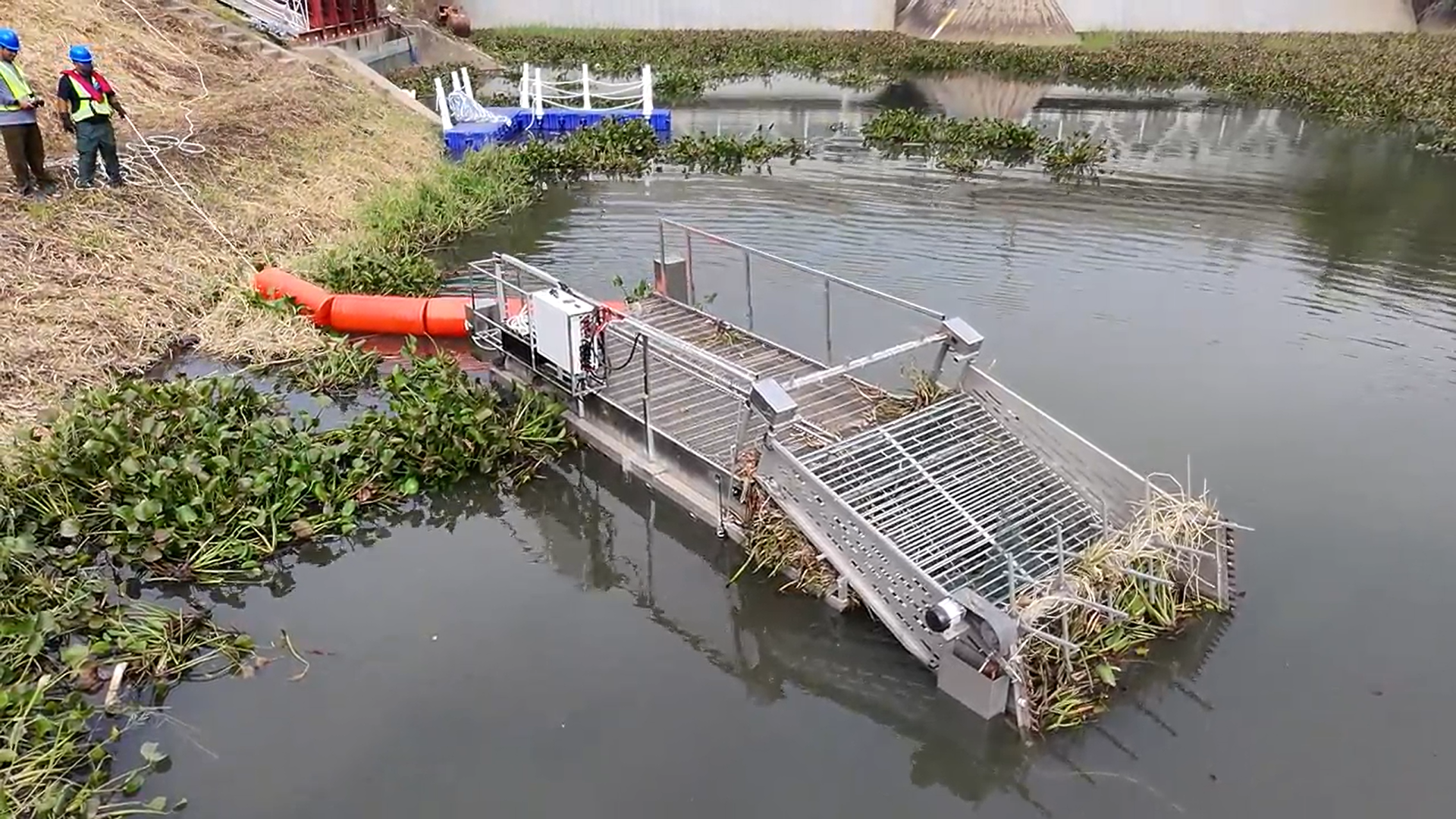
At Clear Robotics, we know exactly what is possible when clean tech meets automation. Our original Clearbot Alligator stands as a proven solution—a 100% electric, autonomous vessel that has successfully cleared tons of dense aquatic vegetation across waterways in Hong Kong and India, while generating live operational data for local authorities.
But to tackle the rapidly escalating $2 billion global water hyacinth crisis, we need greater power, speed, and capacity.
Today, we’re introducing our most powerful aquatic vegetation management solution yet: Clearbot Alligator Neo — the world’s largest electric aquatic weed harvester, engineered to deliver up to 3× greater harvesting capacity.
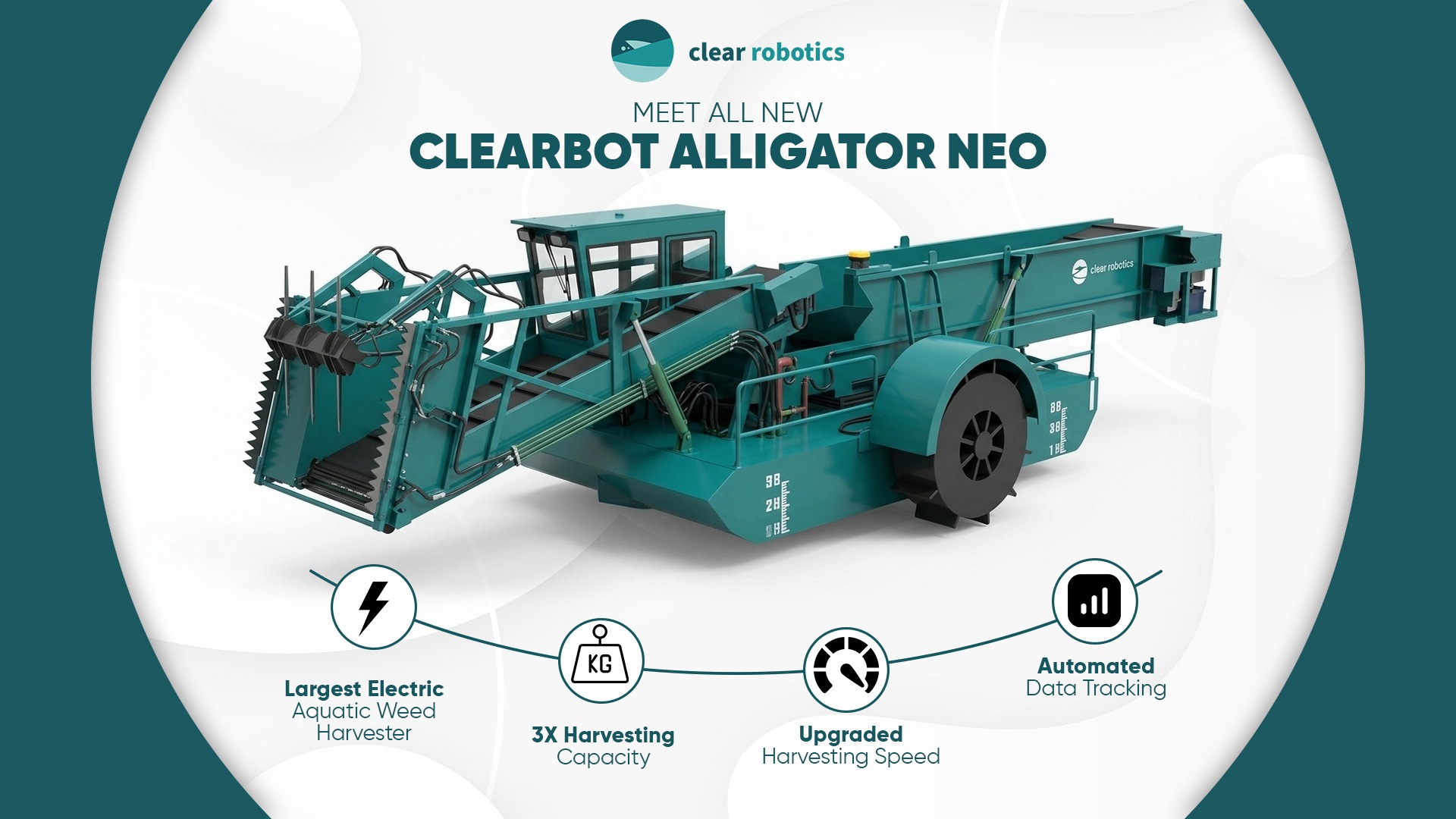
What Makes the Alligator Neo a Modern Powerhouse:
- Massive Payload & Capacity: Built on a wider, reinforced chassis, the Neo holds significantly more dense biomass per run than previous models. This minimizes transit times back to shoreline docking stations, keeping the boat where it belongs: in the water, cutting.
- Aggressive Transit & Cutting Speeds: Equipped with our latest high-torque electric propulsion systems, the Alligator Neo slices through thick, interwoven hyacinth root networks at a much higher velocity, vastly accelerating project timelines for massive lakes and reservoirs.
- Next-Gen Edge AI Analytics: The Neo comes fully loaded with our most advanced edge AI computing suite, precision obstacle avoidance, and high-frequency side-scan sonar. It punches right through underwater canopy scattering, giving operators flawless, real-time weed density metrics and water quality telemetry instantly.
Conclusion
The Clearbot Alligator Neo builds on everything we learned from deploying our original Clearbot Alligator in real-world waterways. We’ve taken a proven platform and upgraded it to meet the demands of larger and more challenging vegetation management operations.
With more speed, greater harvesting capacity, and more precise operational data, the Alligator Neo enables teams to clear aquatic vegetation more efficiently while gaining better visibility into every operation.
It’s the next evolution of the Clearbot Alligator—bigger, faster, and built to deliver more.


